
























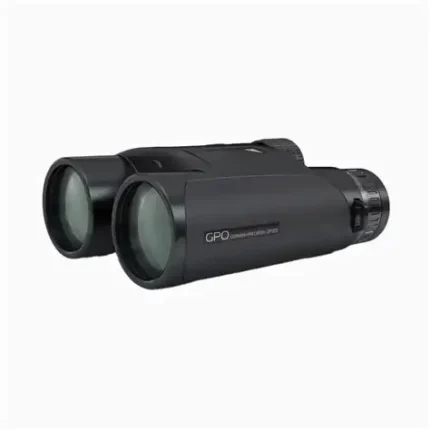
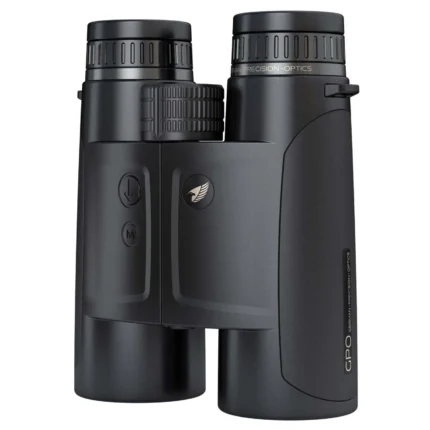
GPO Rangeguide 2800 10×50 Laser Rangefinder Binoculars
The GPO Rangeguide 2800 10x50 combines 10x binocular viewing with an integrated laser rangefinder. Featuring 50mm objective lenses, a magnesium housing and a red OLED display, it brings observation and distance measurement together in one instrument. Measure highly reflective targets at up to 2,800 metres, with scan mode, angle measurement and temperature display for added information in the field.
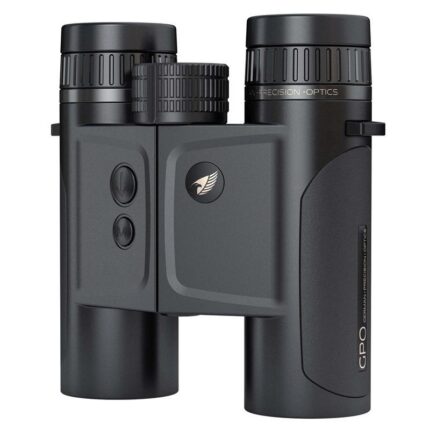
GPO Rangeguide 2800 8×50 Laser Rangefinder Binoculars
The GPO Rangeguide 2800 8x50 combines 8x binocular viewing with an integrated laser rangefinder. Its 50mm objective lenses and 115m field of view at 1,000m help you observe subjects within the surrounding landscape. Measure highly reflective targets at up to 2,800 metres, with fast scan measurements, angle information and an adjustable OLED display.
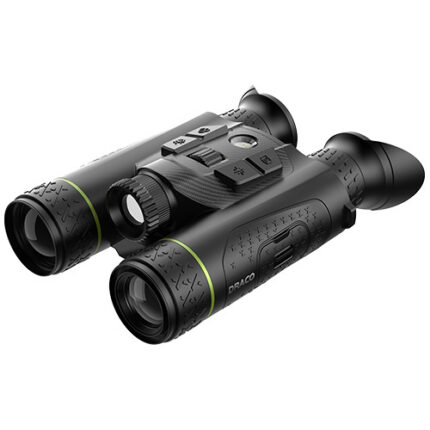
Pixfra Draco D225-4K Multispectral Binoculars with Rangefinder
The Pixfra Draco D225-4K combines thermal imaging, 4K daytime viewing, digital night vision and a laser rangefinder in one handheld binocular. A 256×192 thermal sensor and 25mm lens work alongside a separate digital camera, giving you different ways to observe wildlife. Features include an OLED display, photo and video recording, 64GB storage and rechargeable batteries.
Pixfra Draco D635-4K Multispectral Binoculars with Rangefinder
The Pixfra Draco D635-4K combines a 640×512 thermal sensor, 4K digital day/night viewing and a laser rangefinder in one handheld binocular. Its 35mm thermal lens provides a wide view for wildlife observation, while an OLED display, photo and video recording, 64GB storage and replaceable rechargeable batteries complete the package.
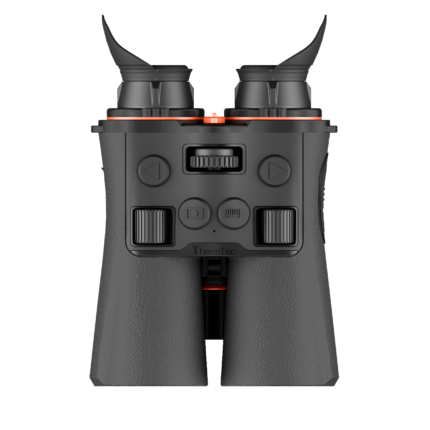
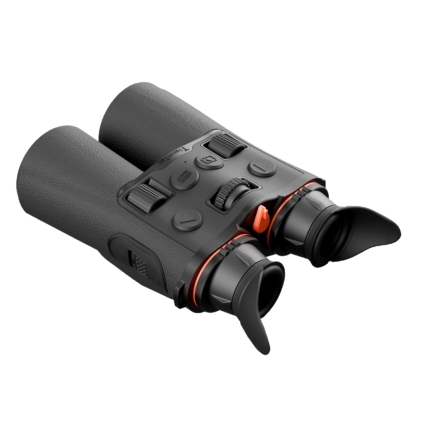
ThermTec Ventus 635L Multi-Spectrum Binoculars with Laser Rangefinder
The ThermTec Ventus 635L combines thermal imaging, digital day and night viewing, and a built-in laser rangefinder. Featuring a 640 × 512 thermal sensor, 35mm F0.9 lens and switchable infrared illumination, these multi-spectrum binoculars offer versatile observation for wildlife watching and gamekeeping.
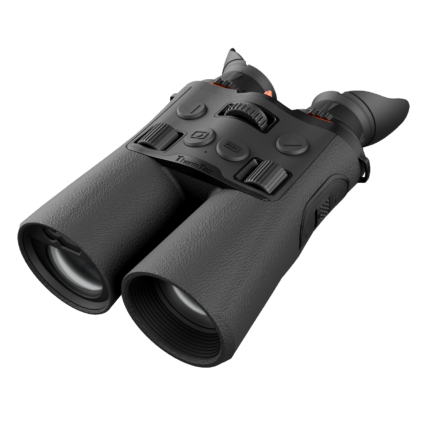
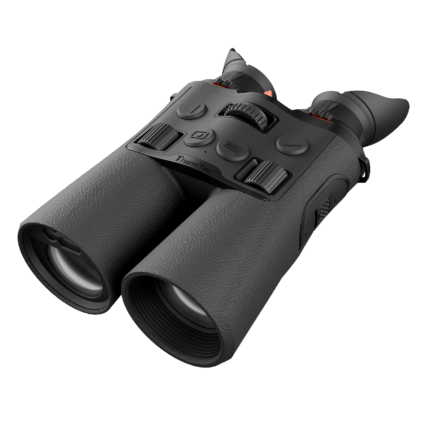
ThermTec Ventus 650L Multi-Spectrum Binoculars with Laser Rangefinder
The ThermTec Ventus 650L combines a 640 × 512 thermal sensor and 50mm F1.0 lens with digital day/night viewing. Featuring switchable infrared illumination and an integrated laser rangefinder, these multi-spectrum binoculars bring observation and distance measurement together for wildlife watching and gamekeeping.
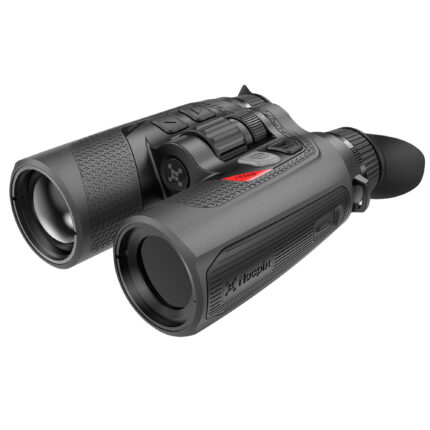
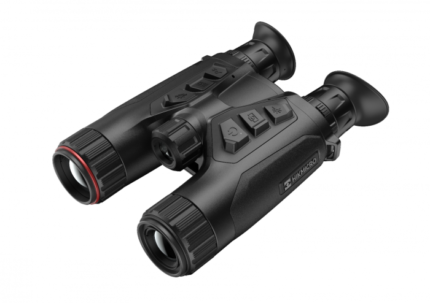
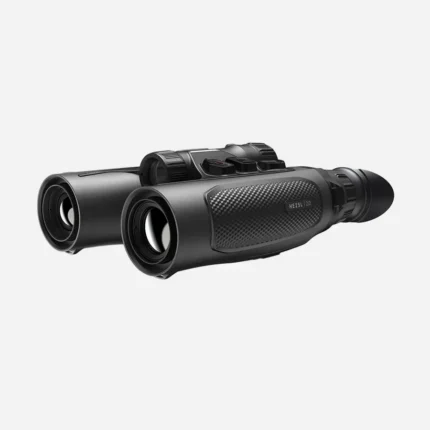
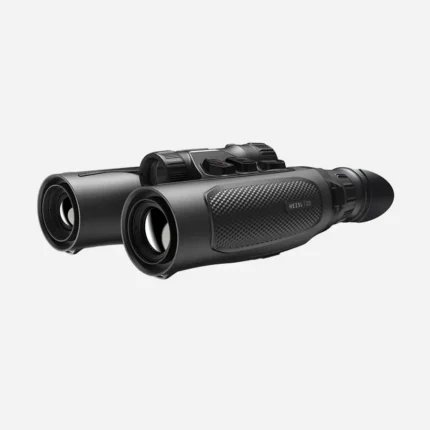
HIKMICRO HABROK 4K 2.0 HE25L Multi-Spectrum Thermal Binocular

The HIKMICRO HABROK 4K 2.0 HE25L is a compact multispectrum thermal binocular combining a 256 × 192 thermal sensor, 4K digital camera, 1000m laser rangefinder and replaceable 940nm and 850nm infrared illuminators. With shutterless thermal technology, 5.5–22× digital magnification and IP67 protection, it provides detailed observation in daylight, twilight and darkness.
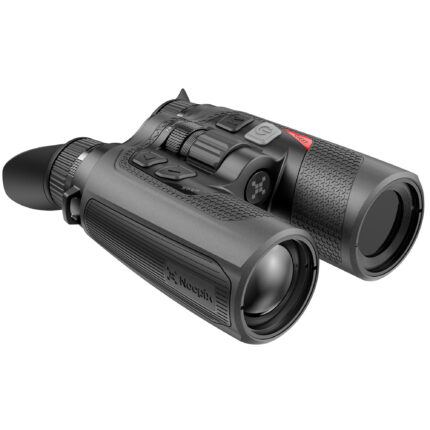
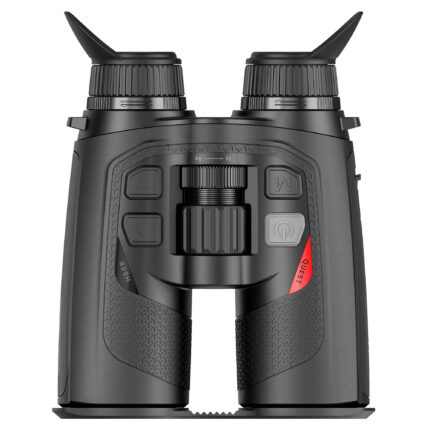
Nocpix QUEST H50R Thermal Binoculars with 1000m Laser Rangefinder
Thermal Binoculars & Thermal Imaging Binoculars
Explore Ellmor’s range of thermal binoculars and thermal imaging binoculars for wildlife observation, gamekeeping, pest control and professional field use. Combining thermal imaging technology with a comfortable two-eye viewing experience, thermal binoculars are ideal for extended observation and scanning across fields, woodland and open countryside.
Our range includes advanced thermal and multispectral binoculars from leading manufacturers, with models offering high-resolution thermal sensors, digital day and night imaging, integrated laser rangefinders and long detection ranges.
Whether you’re looking for thermal binoculars for gamekeeping and wildlife observation or an advanced multispectral system for professional use, Ellmor offers options across a range of specifications and budgets.
Thermal Binoculars for Wildlife & Gamekeeping
Thermal imaging binoculars detect heat rather than relying on visible light, allowing animals and other heat sources to be observed in darkness and challenging visibility conditions.
For gamekeepers, wildlife managers and pest-control professionals, thermal binoculars provide an effective way to scan large areas and observe animals without relying on conventional lighting.
The binocular-style design can also provide a more comfortable viewing experience during longer observation periods compared with using a single-eye thermal device.
384, 640 & High-Resolution Thermal Binoculars
Thermal sensor resolution is an important consideration when choosing thermal binoculars.
384-resolution thermal binoculars can provide a good balance between performance and price for general field use.
640 thermal binoculars provide greater image detail and can retain more useful detail when digital magnification is applied.
Premium models may offer even higher-resolution thermal imaging technology, making them particularly attractive for users wanting maximum image quality and observation performance.
The best choice will depend on your typical viewing distances, field of view requirements, intended application and budget.
Multispectral & 4K Thermal Binoculars
Many modern premium devices are more than conventional thermal binoculars. Multispectral binoculars can combine a thermal imaging sensor with a high-resolution visible-light or digital day/night camera in a single device.
This allows the user to locate a heat signature using thermal imaging and then switch to or combine other imaging modes for additional visual detail.
Selected models may also include 4K digital imaging, optical or digital zoom, image and video recording and advanced image-processing technology.
Thermal Binoculars with Laser Rangefinders
An integrated laser rangefinder (LRF) allows the distance to an observed object to be measured directly through the binoculars.
This can be particularly useful when observing across open countryside, where accurately judging distance through a thermal image can otherwise be difficult.
Many of the advanced thermal and multispectral binoculars available today incorporate LRF technology alongside thermal and digital imaging.
Choosing the Right Thermal Binoculars
When comparing thermal binoculars, consider:
- Thermal sensor resolution
- Thermal sensitivity or NETD
- Objective lens size
- Magnification
- Field of view
- Detection range
- Laser rangefinder (LRF)
- Digital day/night imaging
- Multispectral capability
- Display resolution